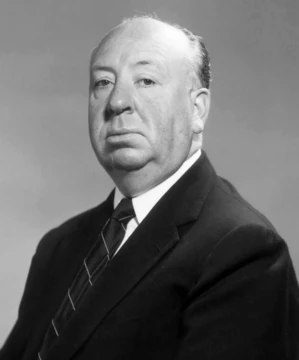
Roberto Rossellini
Italian neorealist director known for Rome, Open City and Bergman films.

via Wikipedia: Roberto Rossellini · see source
Roberto Gastone Zeffiro Rossellini (8 May 1906 – 3 June 1977) was an Italian film director, screenwriter and producer. He was one of the most prominent directors of the Italian neorealist cinema, contributing to the movement with films such as Rome, Open City (1945), Paisan (1946), and Germany, Year Zero (1948). He is also known for his films starring his then wife Ingrid Bergman, Stromboli (1950), Europe '51 (1952), Journey to Italy (1954), Fear (1954) and Joan of Arc at the Stake (1954).
- born
- 8 May 1906, Rome, Italy
- died
- 3 June 1977, age 71
- field
- Film director, screenwriter, producer
- nationality
- Italian
- known_for
- Italian neorealist cinema; films with Ingrid Bergman
Verified Timeline
Lore & Background
Rossellini was born in Rome. His mother, Elettra (née Bellan), was a housewife born in Rovigo, Veneto, and his father, Angiolo Giuseppe "Peppino" Rossellini, who owned a construction firm, was born in Rome from a family originally from Pisa, Tuscany. He lived on the Via Ludovisi, where Benito Mussolini had his first Roman hotel in 1922. Rossellini's father built the first modern cinema in Rome, the Corso, granting his son an unlimited free pass; the cinema opened in 1918, and the young Rossellini started frequenting the cinema regularly at an early age. When his father died, he worked in film sound-making and for a certain time experienced all the ancillary jobs related to the creation of a film. Rossellini had a younger brother, Renzo, who later scored many of his films. Although he was not personally religious, he had a strong interest in Christian values in the contemporary world. In 1937, Rossellini shot his first film, Prélude à l'après-midi d'un faune, which was possibly unreleased and later lost. His first feature film, The White Ship (1941), was sponsored by the audiovisual propaganda centre of Navy Department and is the first work in Rossellini's "Fascist Trilogy", together with A Pilot Returns (1942) and The Man with a Cross (1943). During this period he developed relationships with Federico Fellini and Aldo Fabrizi. The Fascist regime collapsed in 1943, and two months after the liberation of Rome (4 June 1944), Rossellini began preparing the anti-fascist Roma città aperta (Rome, Open City, 1945), with Fellini assisting on the script. Fabrizi played the role of the priest, while Rossellini self-produced, filming commencing in January 1945. Most of the money came from credits and loans, and film had to be found on the black market. This dramatic film was an immediate success. It has been called the first film of the Neorealist Trilogy, the second title of which was Paisà (1946), produced with non-professional actors, and the third, Germany, Year Zero (1948), was sponsored by a French producer and filmed in Berlin's French sector. In 1948, Rossellini received a letter from Ingrid Bergman proposing a collaboration: "Dear Mr. Rossellini, I saw your films Open City and Paisan, and enjoyed them very much. If you need a Swedish actress who speaks English very well, who has not forgotten her German, who is not very understandable in French, and who in Italian knows only 'ti amo,' I am ready to come and make a film with you." Their first collaboration was Stromboli terra di Dio (1950). This affair caused a great scandal (Bergman and Rossellini were married to other people); the scandal intensified when Bergman became pregnant with Renato Roberto Ranaldo Giusto Giuseppe ("Robin") Rossellini. Rossellini and Bergman had two more children, Isabella Rossellini and her twin, Isotta Ingrid. In 1957, Jawaharlal Nehru invited him to India to make the documentary India. Though married to Bergman, he had an affair with Sonali Senroy Dasgupta, a screenwriter, herself married to local filmmaker Harisadhan Dasgupta. Nehru had to ask Rossellini to leave. Soon after, Bergman and Rossellini separated. Rossellini eloped with Dasgupta in 1957 when she was 27. He adopted her young son Arjun, renamed Gil Rossellini (23 October 1956 – 3 October 2008). Rossellini and Dasgupta had a daughter together, Raffaella Rossellini (born 1958). In 1973, Rossellini left Dasgupta for producer Silvia D'Amico Bendicò, but he remained married to Dasgupta until his death of a heart attack at age 71 in 1977.
Reader's Guide
Rossellini's significance lies in his foundational role in Italian neorealism. As he declared in an interview: "in order to really create the character that one has in mind, it is necessary for the director to engage in a battle with his actor which usually ends with submitting to the actor's wish. Since I do not have the desire to waste my energy in a battle like this, I only use professional actors occasionally." One of the reasons for success is supposed to be Rossellini's rewriting of the scripts according to the non-professional actors' feelings and histories. Regional accent, dialect and costumes were shown in the film as they were in real life. His Neorealist Trilogy—Rome, Open City (1945), Paisà (1946), and Germany, Year Zero (1948)—are landmark films. After his Neorealist Trilogy, Rossellini produced two films now classified as the 'Transitional films': L'Amore (1948) (with Anna Magnani) and La macchina ammazzacattivi (1952). His films with Ingrid Bergman—Stromboli (1950), Europe '51 (1952), Siamo Donne (1953), Journey to Italy (1954), La paura (1954) and Giovanna d'Arco al rogo (1954)—were commercially unsuccessful, though Journey to Italy is well regarded in some quarters. He was an acknowledged master for the critics of Cahiers du Cinéma in general and André Bazin, François Truffaut, and Jean-Luc Godard in particular. Truffaut noted in his 1963 essay, Roberto Rossellini Prefers Real Life, that Rossellini's influence among the directors who became part of the nouvelle vague was so great that he was in every sense "the father of the French New Wave". In 1971, Rice University in Houston, Texas, invited Rossellini to help establish a Media Center, where in 1970 he had begun planning a film on science with Rice professor Donald D. Clayton. They worked daily for two weeks in Rome in summer 1970, but financing was insufficient for filming to begin. In 1973, he was invited to teach at Yale University in New Haven, Connecticut, where he taught a one-semester course titled "The Essential Image." Rossellini's final project was the documentary Beaubourg, filmed in 1977 and first premiered in 1983. Along with Albert Einstein, Rossellini was one of the sponsors of the Peoples' World Convention (PWC), also known as Peoples' World Constituent Assembly (PWCA), which took place in 1950–51 at Palais Electoral, Geneva, Switzerland.
Did You Know?
- Rossellini's father built the first modern cinema in Rome, the Corso, which opened in 1918 and gave young Rossellini an unlimited free pass.
- Ingrid Bergman's first letter to Rossellini began: 'Dear Mr. Rossellini, I saw your films Open City and Paisan, and enjoyed them very much. If you need a Swedish actress who speaks English very well... I am ready to come and make a film with you.'
- During filming of Stromboli (1950), the volcano on the island of Stromboli quite conveniently erupted.
- Rossellini was one of the sponsors of the Peoples' World Convention (PWC) in 1950–51, alongside Albert Einstein.
- His final project was the documentary Beaubourg, filmed in 1977 and first premiered in 1983.
Gallery
Frequently Asked Questions
Who is Roberto Rossellini?
Roberto Rossellini (1906–1977) was an Italian filmmaker who worked as a director, screenwriter, and producer. He is most closely associated with the Italian neorealist movement of the 1940s and 1950s.
What are Roberto Rossellini's most famous films?
His neorealist masterpieces include Rome, Open City, Paisan, and Germany, Year Zero. He is equally remembered for directing Ingrid Bergman in titles like Stromboli, Europe '51, and Journey to Italy.
What is the connection between Rossellini and Ingrid Bergman?
The two were married, and Rossellini cast Bergman in a series of personal, introspective films during the early 1950s. Their partnership produced works such as Fear, Joan of Arc at the Stake, and Journey to Italy.
How did Rossellini shape Italian neorealism?
He helped define the movement by placing ordinary postwar Italian life at the center of his narratives and shooting in real locations rather than studios. Films like Rome, Open City and Germany, Year Zero became reference points for the style.
When and where did Roberto Rossellini die?
Rossellini died on 3 June 1977, at the age of 71. He had remained active in filmmaking and production up until his passing.
More in Auteur Film Directors 1-17
Spotted an error? Know more?
This is a living reference — every entry is fact-audited, and reader corrections feed straight into our audit queue. Suggest an edit · See this site's audit record