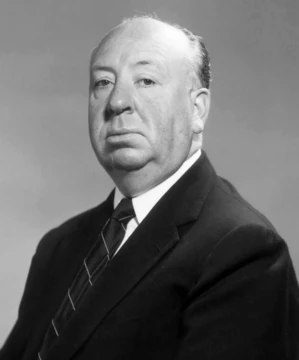
Robert Zemeckis
American filmmaker known for blending visual effects with storytelling.

via Wikipedia: Steven Spielberg · see source
He is known for directing and producing a range of successful and influential films that often blend cutting-edge visual effects with storytelling. He has received an Academy Award and a Golden Globe Award, as well as nominations for five British Academy Film Awards and a Daytime Emmy Award.
- field
- Filmmaker
- nationality
- American
- known_for
- Directing Back to the Future trilogy, Who Framed Roger Rabbit, Forrest Gump; ble
Verified Timeline
Lore & Background
He grew up in a working-class family on Chicago's South Side, attending a Catholic grade school and Fenger Academy High School. As a child, he loved television and was fascinated by his parents' 8 mm film home movie camera, gradually producing narrative films with friends that incorporated stop-motion and visual effects. He first attended Northern Illinois University and gained early film experience as a film cutter for NBC News in Chicago, later transferring to the University of Southern California's School of Cinematic Arts after convincing the school to accept him despite average grades. At USC, he met fellow student Bob Gale, and they co-wrote unproduced screenplays before Zemeckis graduated in 1973. Zemeckis gained recognition for his short film A Field of Honor (1973), which earned him a Student Academy Award for Special Jury Prize at USC, bringing him to the attention of Steven Spielberg. After a period of difficulty finding work, Michael Douglas hired him in 1984 to direct Romancing the Stone, a sleeper hit. This success gave Zemeckis the clout to direct Back to the Future (1985), which was wildly successful and followed by two sequels.
Reader's Guide
Robert Zemeckis is significant for his role in advancing visual effects in mainstream cinema, particularly through his use of motion-capture techniques in films like The Polar Express (2004) and A Christmas Carol (2009), as well as his integration of live-action and animation in Who Framed Roger Rabbit. His work often blends cutting-edge technology with narrative storytelling, as seen in the Back to the Future trilogy and Forrest Gump. Zemeckis is one of only a few people to win Academy Awards for both student and professional work. His collaborations with composer Alan Silvestri since 1984 and with actor Tom Hanks across five films have been notable. His legacy includes a range of genres from comedy to drama to science fiction, and his films have had lasting cultural impact.
Did You Know?
- Zemeckis won a Student Academy Award for his short film A Field of Honor (1973) at USC.
- He is one of only a few people to win Academy Awards for both student and professional work.
- Zemeckis has collaborated with composer Alan Silvestri since 1984 and with actor Tom Hanks across five films.
Frequently Asked Questions
Who is Robert Zemeckis?
Robert Lee Zemeckis, born May 14, 1951, is an American director and producer whose career has spanned from the late 1970s to the present. He is widely recognized for pairing inventive visual effects with emotionally grounded narratives across decades of filmmaking.
What are Robert Zemeckis's most famous films?
His most celebrated titles include the Back to the Future trilogy, Who Framed Roger Rabbit, and Forrest Gump. These three projects collectively define his reputation as a storyteller who balances spectacle with heart.
What makes Robert Zemeckis's directorial style distinctive?
Zemeckis is noted for integrating practical and digital effects so seamlessly that they serve the story rather than overshadow it. His work consistently prioritizes character-driven plots while pushing the boundaries of what cinema can visually achieve.
What major awards has Robert Zemeckis received?
He has won an Academy Award and a Golden Globe Award during his career. Additionally, he has earned five BAFTA nominations and a Daytime Emmy nomination, reflecting his broad influence across film and television.
Why is Robert Zemeckis considered an auteur in cinema?
Despite working within major studio systems, Zemeckis maintained a recognizable personal voice across genres, from sci-fi comedies to historical dramas. His consistent focus on blending technological innovation with human storytelling sets him apart as a director with a cohesive artistic identity.
More in Auteur Film Directors 1-17
Spotted an error? Know more?
This is a living reference — every entry is fact-audited, and reader corrections feed straight into our audit queue. Suggest an edit · See this site's audit record